


Everyone wants a number. The honest answer is that granny flat costs in NSW vary more than almost any other building project, and the variation has very little to do with which builder you choose. It has everything to do with your block.
Exalt Builder Pty Ltd builds granny flats across Sydney and the South West Growth Corridor. We've walked enough sites to know that two identical floor plans, a few streets apart, can produce quotes that differ by $40,000 or more. This guide explains why, and gives you the 2026 cost framework you need before you talk to anyone.
What does a granny flat cost in NSW in 2026?
For a standard, council-compliant granny flat in Sydney, a realistic all-in budget looks like this:
- 1-bedroom (45-50 sqm): $150,000 to $200,000
- 2-bedroom (55-60 sqm), medium spec: $175,000 to $250,000
- 2-bedroom, premium finishes or complex site: $250,000 to $320,000+
These figures are turnkey and inclusive of design, approvals, construction, connections, and basic external works. They are not "starting from" figures with essential items stripped out.
Construction cost on its own typically runs $2,200 to $3,300 per square metre for a standard brick veneer secondary dwelling in Sydney. Add approximately $30,000 to $75,000 for everything else, and you arrive at the all-in number.
NSW planning rules cap secondary dwellings at 60 square metres. That limit is fixed regardless of your block size.
What actually drives the price up or down?
This is where most guides stop being useful. They list "site conditions" as a factor and move on. Here is what that means in practice.
Sewer connection distance. If the sewer main runs along the rear of your property, the connection is straightforward. If it sits under a driveway 20 metres away, or if it requires trenching through rock, that single item can add $10,000 to $25,000 to your project. Sewer location is the single biggest swing factor in Sydney granny flat pricing.
Slab classification. Australian Standard AS2870 classifies residential sites by soil movement risk. A Class A site, stable and flat, uses a standard slab. Class H1 or H2 sites, reactive clay soils that expand and contract with moisture, require a more robust slab design. Much of Sydney's growth corridor, including parts of Oran Park, Harrington Park, and Gregory Hills, sits on reactive soils. So do many older suburbs. This is not something you discover at the end, it is something a civil engineer should identify on the first site visit.
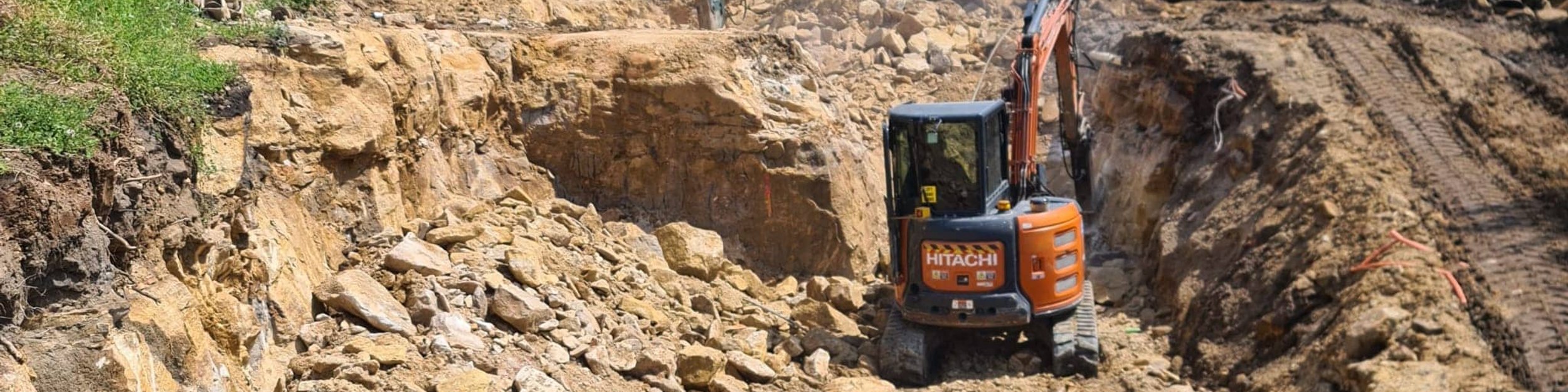
Slope and access. A flat block with clear rear access is the easiest scenario. A sloped site requires retaining walls, extra excavation, or a pier-and-beam slab system instead of slab-on-ground. Restricted access, for instance a narrow side gate, increases labour costs and limits what equipment can be brought in.
Electrical switchboard capacity. Older homes in established Sydney suburbs sometimes have switchboards that cannot easily accommodate a second dwelling. An upgrade adds cost, but it's not negotiable if you want a separate electricity meter for rental.
What are the additional costs beyond the build price?
Beyond construction, budget for the following. These apply to almost every project.
Approvals and compliance: Council development application or complying development certificate, BASIX assessment, structural engineering, surveying, and geotechnical report if required. Total: $5,000 to $12,000.
Service connections: Water, sewer, stormwater, and electrical connections from the main dwelling. Total: $15,000 to $30,000, depending on distance and ground conditions.
Site preparation: Vegetation clearing, soil import or export, retaining walls on sloped sites. Total: $3,000 to $15,000+.
External works: Path to the granny flat, privacy fencing, and basic landscaping. Total: $8,000 to $20,000.
Total additional costs typically run $30,000 to $75,000. When you see an advertised price that seems low, these are usually the items missing from it.
Is a granny flat a good investment in Sydney right now?
In most Sydney locations, yes, provided the project is built properly and the approvals are handled correctly.
A two-bedroom granny flat in Western Sydney or the South West Growth Corridor can attract weekly rents of $450 to $600 depending on location, condition, and proximity to transport. At $500 per week, a $220,000 project generates roughly $26,000 per year in gross rental income, a return above 11% before costs. That is difficult to match with most other residential property strategies.
The key condition is quality. A poorly built secondary dwelling in a new estate full of better options will sit vacant. A well-designed, well-built granny flat with natural light, proper ventilation, and a functional layout will not.
For homeowners in growth corridors like Oran Park, Penrith, and Castle Hill, demand for quality secondary dwellings consistently outpaces supply. The rental opportunity is real.
What to look for in a granny flat builder
Get a quote that includes a site visit before any number is put on paper. Any builder quoting off a floor plan without walking your block cannot tell you what the sewer connection will cost, what your slab classification is, or whether your site has restricted access. Those omissions show up later, in variations you did not expect.
For a granny flat builder working across Sydney and the South West, Audifax Benitez has a civil engineering background behind every project. That means site conditions get assessed properly from the start, and your budget is based on what your block actually requires, not a best-case scenario.
Frequently asked questions
Can I build a granny flat on my block in NSW?
Most residential blocks in NSW that meet the minimum size requirements (typically 450 to 500 square metres depending on the council) and are zoned R1, R2, R3, or R4 can accommodate a granny flat. A complying development certificate is available for most standard blocks and offers a faster approval path than a full development application. A site assessment will confirm what is possible on your specific property.
What is the maximum size for a granny flat in NSW?
60 square metres of floor space, not including any attached carport or covered outdoor area. This applies statewide under the State Environmental Planning Policy (Housing).
How long does it take to build a granny flat in Sydney?
From initial consultation to handover, most projects take 6 to 9 months. This includes the design and approval phase, which is typically 8 to 12 weeks, followed by construction of 10 to 14 weeks for a standard single-storey build. Complex sites, rock excavation, or council DA pathways add time.
Do I need council approval to build a granny flat in NSW?
Yes, all granny flats require formal approval. Most are approved as complying development, which is assessed by a private certifier rather than council and is generally faster and more predictable. Some sites, including those with heritage overlays, bushfire-prone land, or non-standard zoning, require a full DA through the local council instead.
How much can I rent a granny flat for in Sydney?
Rental rates vary by location, size, and finish quality. In Western Sydney and the South West Growth Corridor, two-bedroom granny flats typically attract $450 to $600 per week. Proximity to train lines, good natural light, and a private entry all support stronger rents. One-bedroom flats generally rent for $380 to $500 per week in the same areas.
If you want a realistic cost assessment for your block before you commit to anything, get in touch with the Exalt Builder team. We'll walk the site, give you an honest picture of what your project involves, and quote from there.